
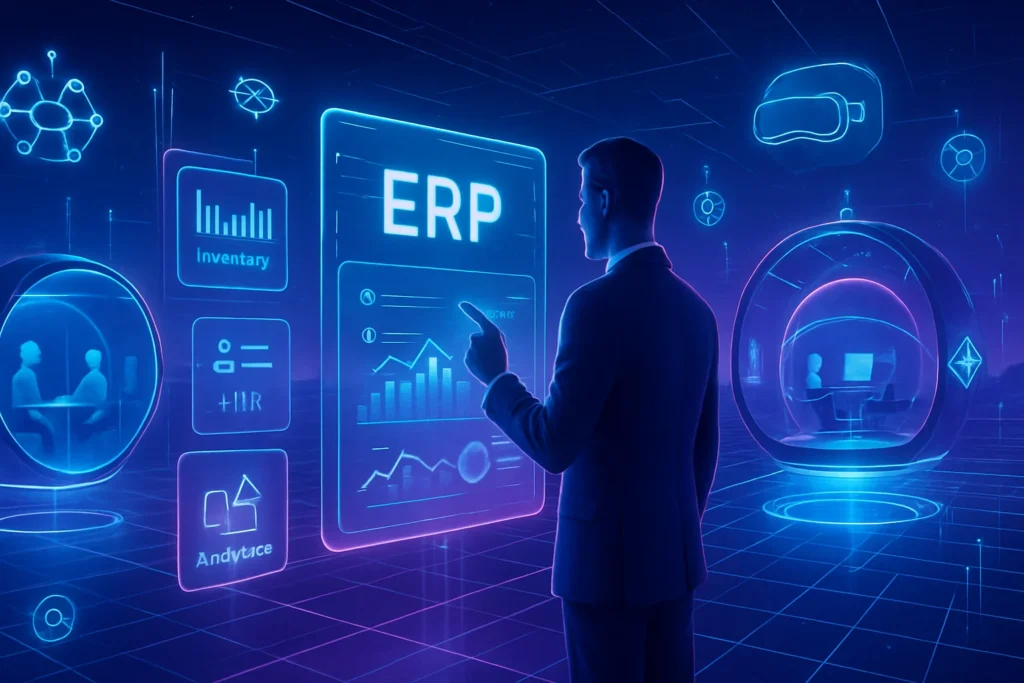
The Metaverse is no longer just a sci-fi concept—it’s rapidly transforming how businesses operate. With virtual offices, digital workspaces, and immersive collaboration tools becoming mainstream, companies must rethink their Enterprise Resource Planning (ERP) strategies.
But how does the Metaverse impact ERP Dynamics? As businesses shift toward decentralised, 3D workspaces, ERP systems must evolve to support real-time data integration, AI-driven automation, and seamless virtual collaboration.
In this blog, we’ll explore:
- How the Metaverse is reshaping traditional ERP functions.
- The opportunities and challenges of integrating ERP with virtual workspaces.
- What businesses can do to prepare for the next wave of digital transformation.
Understanding ERP Dynamics in the Digital Age
What is ERP Dynamics?
ERP Dynamics refers to the evolving capabilities of Enterprise Resource Planning systems, adapting to new technologies and business needs. Modern ERP goes beyond basic financial and inventory management—it now includes AI, IoT, and cloud-based analytics.
Key components of ERP Dynamics:
- Finance & Accounting – Automated invoicing, real-time reporting.
- Supply Chain Management – Predictive logistics, blockchain tracking.
- Human Resources – Virtual onboarding, AI-driven talent management.
- Customer Relationship Management (CRM) – Personalised, data-driven engagement.
The Role of ERP in Modern Businesses
ERP systems act as the backbone of business operations, ensuring:
✔ Centralised Data – One source of truth for all departments.
✔ Process Automation – Reducing manual tasks and errors.
✔ Real-Time Decision-Making – Instant insights for agile strategies.
As businesses enter the Metaverse, these functions must extend into virtual environments.
The Metaverse and Its Impact on Business Operations
What Is the Metaverse?
The Metaverse is a persistent, interconnected digital universe where users interact via avatars, VR headsets, and blockchain-powered economies. Key technologies driving it include:
- Virtual Reality (VR) & Augmented Reality (AR) – Immersive workspaces.
- Blockchain & NFTs – Secure digital asset ownership.
- AI & Digital Twins – Simulated real-world processes.
How Virtual Offices Are Changing Work
Companies like Microsoft (Mesh) and Meta (Horizon Workrooms) are already building Metaverse offices. These spaces enable:
- 3D Collaboration – Teams meet as avatars in virtual boardrooms.
- Digital Twin Workspaces – Replicas of physical offices for remote employees.
- Decentralised Workforce Management – Global teams working in sync without geographical limits.
But to function efficiently, these virtual offices need ERP systems that operate seamlessly in the Metaverse.
How the Metaverse Influences ERP Dynamics
1. Enhanced Real-Time Collaboration
Traditional ERP relies on dashboards and spreadsheets—imagine navigating them in a 3D virtual space where:
- Teams manipulate data visualisations in mid-air.
- Supply chain managers inspect digital twin warehouses in VR.
- Financial analysts discuss forecasts in an immersive analytics hub.
2. Decentralised Data Access & Security Challenges
The Metaverse runs on cloud and blockchain, meaning ERP systems must adapt to:
✔ Borderless Access – Employees worldwide need secure, instant ERP access.
✔ Blockchain Integration – Smart contracts for automated approvals and audits.
⚠ Security Risks – Increased exposure to cyber threats demands stronger encryption.
3. AI and Automation in Virtual ERP Systems
AI will play a bigger role in Metaverse ERP, such as:
- Virtual ERP Assistants – AI avatars guiding users through workflows.
- Predictive Maintenance – IoT sensors in digital factories triggering ERP alerts.
- Automated Compliance – AI tracking regulatory changes in real time.
Challenges of Integrating ERP with the Metaverse
1. Technical Limitations & Adoption Barriers
- High Costs – VR hardware and Metaverse-ready ERP upgrades require investment.
- Employee Training – Staff must learn to navigate ERP in a 3D environment.
2. Data Synchronisation Across Virtual & Physical Systems
- Ensuring ERP data remains consistent between real-world and Metaverse operations.
- Avoiding silos when integrating with multiple Metaverse platforms (e.g., Meta, Decentraland).
The Future of ERP Dynamics in the Metaverse
Emerging Trends to Watch
🔹 VR-Powered ERP Dashboards – Manipulate data with hand gestures in VR.
🔹 NFT-Based Asset Management – Track ownership of digital/physical assets via blockchain.
🔹 Metaverse-Native ERP Solutions – ERP systems built exclusively for virtual environments.
How Businesses Can Prepare
✅ Adopt Scalable Cloud ERP – Ensure flexibility for Metaverse integration.
✅ Partner with Metaverse Tech Providers – Collaborate with VR/blockchain experts.
✅ Upskill Employees – Train teams on virtual collaboration and next-gen ERP tools.
Conclusion
The Metaverse is set to revolutionise ERP Dynamics, introducing immersive, AI-driven, and decentralised ways of managing business operations. While challenges like security and integration remain, forward-thinking companies can gain a competitive edge by adapting early.
The question isn’t if ERP will evolve for the Metaverse—it’s how soon businesses can harness its potential.
Is your ERP system ready for the Metaverse? Contact us today to explore next-gen ERP solutions tailored for virtual workspaces! 🚀