
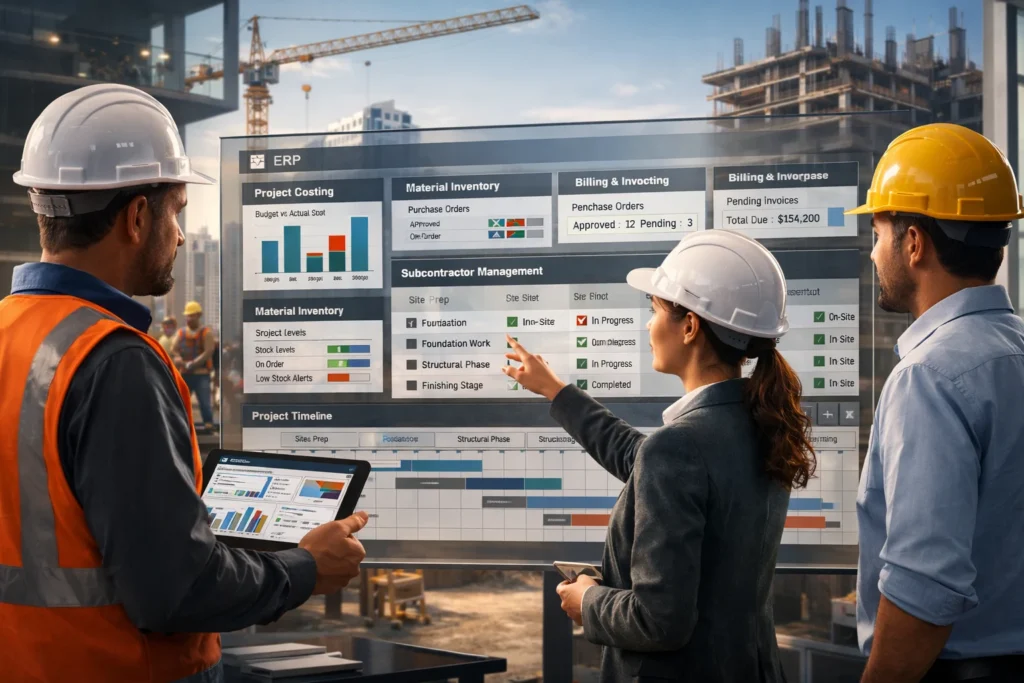
The construction industry operates in one of the most complex business environments—multiple projects running simultaneously, tight deadlines, fluctuating material costs, subcontractor coordination, and strict compliance requirements. Managing all of this with spreadsheets or disconnected software often leads to cost overruns, delays, and poor visibility.
This is where ERP software for construction industry plays a critical role. The right ERP system can centralise operations, improve project control, and significantly enhance profitability. However, choosing the wrong ERP—or a generic one—can create more problems than it solves.
In this guide, we’ll walk you through how to choose the right ERP software for your construction business, what features matter most, and how to evaluate ERP vendors effectively.
Why the Construction Industry Needs ERP Software
Construction businesses face challenges that standard accounting or project management tools simply cannot handle. Unlike manufacturing or retail, construction projects are location-based, timeline-driven, and heavily dependent on accurate cost tracking.
Common Challenges in Construction Operations
- Project delays caused by poor coordination
- Cost overruns due to inaccurate job costing
- Manual billing and delayed payments
- Material wastage and inventory mismanagement
- Lack of real-time visibility from job sites
Without an integrated system, these issues compound quickly and impact both margins and reputation.
How ERP Software for Construction Industry Solves These Problems
Construction-specific ERP systems unify project management, finance, procurement, inventory, and HR into a single platform. This ensures:
- Real-time project cost tracking
- Accurate billing and cash flow control
- Better collaboration between site and office teams
- Data-driven decision-making
Key Features to Look for in ERP Software for Construction Industry
Not all ERP solutions are built for construction. Choosing a system without industry-specific functionality is one of the most common mistakes companies make.
Project Management and Job Costing
- Project planning and milestone tracking
- Budget vs actual cost comparison
- Work-in-progress (WIP) monitoring
- Cost allocation by project, phase, or activity
These features ensure you always know where your project stands financially.
Financial Management and Accounting
- Project-based accounting
- Automated billing and invoicing
- Revenue recognition for long-term projects
- Tax compliance and audit-ready reports
An ERP tailored for construction ensures financial accuracy across multiple projects.
Procurement, Inventory, and Equipment Management
- Material requirement planning (MRP)
- Inventory tracking across multiple sites
- Purchase order automation
- Equipment usage, maintenance, and depreciation tracking
This reduces wastage, prevents stockouts, and improves asset utilisation.
Contract, Subcontractor, and Payroll Management
- Contract lifecycle management
- Subcontractor billing and compliance tracking
- Labour cost allocation by project
- Payroll integration with attendance and site data
These capabilities help control labour costs and ensure compliance.
Cloud vs On-Premise ERP for Construction Companies
Choosing the right deployment model is equally important.
Benefits of Cloud-Based ERP Software for Construction Industry
- Access data from job sites, offices, and remote locations
- Lower upfront infrastructure costs
- Faster implementation
- Automatic updates and security enhancements
- Easy scalability as your business grows
Cloud ERP is ideal for modern construction businesses with multiple sites.
When On-Premise ERP May Be Suitable
- Strict internal IT policies
- Regulatory requirements for data control
- Existing infrastructure investments
However, on-premise systems often involve higher maintenance costs and limited flexibility.
Scalability and Customisation Considerations
Construction companies grow by taking on more projects, larger contracts, or expanding to new regions. Your ERP must support that growth.
Supporting Multi-Project and Multi-Location Operations
- Manage multiple projects simultaneously
- Consolidated reporting across sites
- Inter-company and inter-branch transactions
Custom Workflows and Industry-Specific Modules
- Approval workflows tailored to construction processes
- Custom reporting formats
- Integration with planning, estimating, or BIM tools
Scalable ERP software for construction industry adapts to your business—not the other way around.
Integration Capabilities and Data Visibility
ERP works best when it becomes the central system for your business.
Integration with Existing Construction Tools
- CRM and sales systems
- Project planning and scheduling tools
- Payroll and HR systems
- Third-party accounting or compliance tools
Seamless integration eliminates duplicate data entry and errors.
Real-Time Dashboards and Reporting
- Project health dashboards
- Cost, margin, and profitability reports
- Material consumption and wastage analysis
- Management-level KPIs
Real-time insights enable proactive decision-making instead of reactive firefighting.
Evaluating ERP Vendors for the Construction Industry
The software is only as good as the vendor behind it.
Industry Experience and Case Studies
- Proven experience with construction companies
- Successful ERP implementations in similar business sizes
- Industry-specific product roadmap
Implementation, Training, and Support
- Clear ERP implementation methodology
- Data migration and testing support
- User training programmes
- Reliable post-implementation support
Choosing the right ERP partner is just as important as choosing the software.
Cost, ROI, and Long-Term Value of ERP Software
ERP is an investment—not just an expense.
Total Cost of Ownership (TCO)
- Software licensing or subscription
- Implementation and customisation
- Training and support
- Ongoing maintenance
Understanding the full cost helps avoid surprises later.
Measuring ROI from ERP Software for Construction Industry
- Reduced project overruns
- Faster billing and improved cash flow
- Lower material wastage
- Improved productivity and resource utilisation
A well-implemented ERP typically pays for itself within a few years.
Common Mistakes to Avoid When Choosing Construction ERP
- Selecting generic ERP without construction-specific features
- Focusing only on price instead of long-term value
- Ignoring user adoption and training
- Underestimating data migration complexity
- Not planning for future scalability
Avoiding these mistakes ensures a smoother ERP journey.
Final Checklist Before Selecting ERP Software for Construction Industry
- Clearly defined business requirements
- Construction-specific features and workflows
- Scalability and customisation options
- Cloud accessibility and integration capabilities
- Vendor experience and support quality
- Clear ROI and budget alignment
Conclusion
Choosing the right ERP software for construction industry is a strategic decision that directly impacts project success, profitability, and long-term growth. The ideal ERP system should address construction-specific challenges, offer real-time visibility, and scale with your business.
Rather than settling for a generic solution, evaluate ERP platforms designed for construction operations. The right choice will help you control costs, improve efficiency, and deliver projects on time—every time.
Request a demo or ERP assessment to see how a construction-focused ERP can transform your operations.