
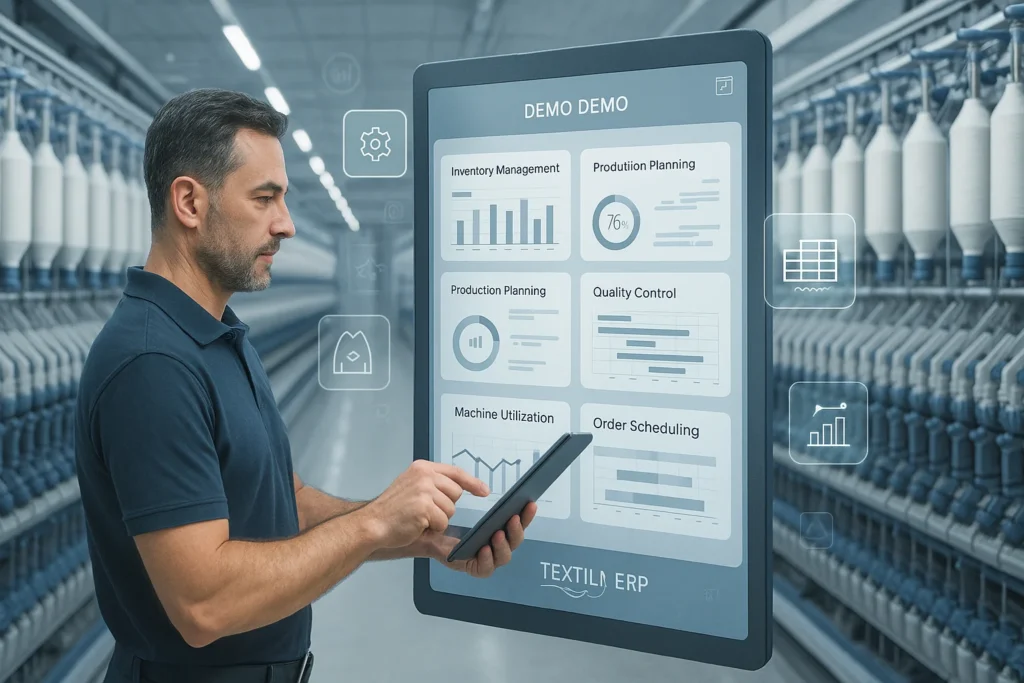
Spinning mills face unique challenges in managing production, inventory, and supply chains. The complexities can be overwhelming, from raw material procurement to meeting tight delivery deadlines. Manual processes often lead to inefficiencies, errors, and missed growth opportunities. This is where ERP software steps in as a transformative solution.
An ERP Software Demo is your gateway to understanding how a tailored ERP system can address these challenges. It provides a firsthand look at how automation, real-time data, and industry-specific features can streamline operations, reduce costs, and boost profitability. Ready to explore how ERP software can revolutionise your spinning mill? Let’s dive in!
Why Spinning Mills Need ERP Software
Challenges in Spinning Mill Operations
Spinning mills operate in a fast-paced environment where precision and efficiency are critical. Common challenges include:
- Inventory Mismanagement: Difficulty tracking raw materials like cotton, polyester, and yarn.
- Production Delays: Lack of real-time insights into machine performance and production schedules.
- Data Silos: Disconnected systems that hinder collaboration between departments.
- Quality Control Issues: Inability to trace defects back to their source.
These challenges can lead to increased costs, missed deadlines, and dissatisfied customers.
Benefits of ERP Software for Spinning Mills
ERP software offers a comprehensive solution to these problems by:
- Streamlining Production: Automating scheduling and optimising machine utilisation.
- Improving Inventory Management: Providing real-time tracking of raw materials and finished goods.
- Enhancing Quality Control: Enabling traceability and reducing defects.
- Facilitating Data-Driven Decisions: Offering actionable insights through real-time analytics.
Key Features to Look for in ERP Software for Spinning Mills
Production Management
An effective ERP system should include tools for:
- Production Planning: Creating optimised schedules to minimise downtime.
- Machine Integration: Monitoring equipment performance in real-time.
- Work Order Tracking: Managing orders from start to finish.
Inventory and Supply Chain Management
Look for features like:
- Automated Inventory Tracking: Keeping tabs on raw materials and finished goods.
- Demand Forecasting: Predicting material requirements to avoid shortages.
- Procurement Planning: Streamlining supplier interactions and purchase orders.
Financial Management
ERP software should also offer
- Cost Tracking: Monitoring production and operational expenses.
- Budgeting Tools: Helping you stay on top of financial goals.
- Accounting Integration: Seamlessly connecting with your existing financial systems.
Reporting and Analytics
Customisable dashboards and reports are essential for the following:
- Tracking KPIs: Monitoring metrics like production efficiency and inventory turnover.
- Gaining Insights: Identifying trends and areas for improvement.
The Importance of an ERP Software Demo
What to Expect During an ERP Software Demo
A demo is your chance to see the software in action. During the session, you can expect:
- A walkthrough of the user interface and key features.
- A demonstration of how the software addresses spinning mill-specific challenges.
- An opportunity to ask questions and see real-time problem-solving.
How to Prepare for an ERP Software Demo
To make the most of your demo:
- Identify Pain Points: List the challenges your spinning mill is facing.
- Set Goals: Define what you want to achieve with ERP software.
- Involve Stakeholders: Include key decision-makers in the demo process.
Evaluating the Demo
After the demo, assess the software based on:
- Ease of Use: Is the interface intuitive and user-friendly?
- Customisation: Can the software be tailored to your needs?
- Scalability: Will it grow with your business?
- Support Services: Does the vendor offer reliable training and support?
Choosing the Right ERP Software for Your Spinning Mill
Factors to Consider
When selecting ERP software, keep the following in mind:
- Industry-Specific Functionality: Ensure the software is designed for spinning mills.
- Vendor Reputation: Research the vendor’s track record and customer reviews.
- Implementation Timeline: Choose a solution that can be deployed quickly and efficiently.
Why Tailored Solutions Matter
Every spinning mill is unique, and a one-size-fits-all approach won’t work. Tailored ERP solutions ensure that:
- Your specific needs are met.
- The software integrates seamlessly with your existing systems.
- Your business is prepared for future growth.
Success Stories: ERP Software in Action
Many spinning mills have transformed their operations with ERP software. For example:
- Mill A: Reduced production downtime by 30% through optimised scheduling.
- Mill B: Improved inventory accuracy by 25% with real-time tracking.
- Mill C: Enhanced traceability, reducing defects by 15%.
These success stories highlight the tangible benefits of implementing the right ERP solution.
Conclusion
Spinning mills operate in a complex and competitive environment, but ERP software can simplify operations and drive growth. An ERP Software Demo is the best way to explore how a tailored solution can meet your specific needs.
Don’t let inefficiencies hold your business back. Schedule your ERP Software Demo today and take the first step toward transforming your spinning mill!
Ready to see how ERP software can revolutionise your spinning mill? Schedule your ERP Software Demo today and discover a solution tailored to your needs!