
Why Injection Moulding Businesses Are Struggling to Scale
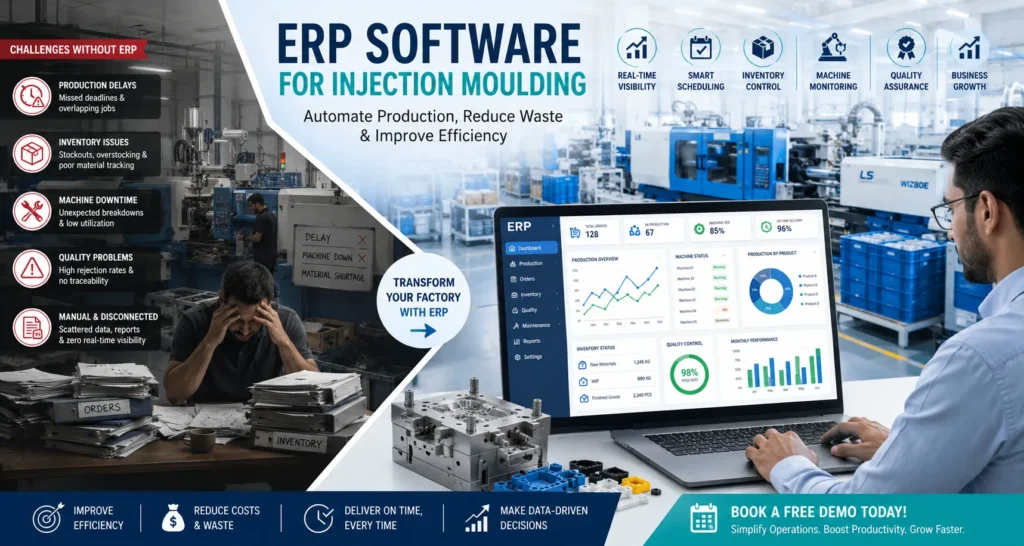
If you’re running an injection moulding business, you already know the daily challenges—production delays, raw material shortages, machine downtime, and inconsistent quality.
Most of these problems don’t come from lack of effort. They come from disconnected systems, manual tracking, and lack of real-time visibility.
Spreadsheets and outdated software might work when you’re small. But as your operations grow, they start slowing you down, causing costly mistakes and missed opportunities.
That’s where ERP Software for Injection Moulding becomes a game-changer.
In this guide, you’ll learn:
- What makes ERP essential for moulding businesses
- Key features you should never compromise on
- How to choose the right ERP solution for your factory
What Is ERP Software for Injection Moulding?
ERP (Enterprise Resource Planning) is a centralised system that connects all your business operations—production, inventory, sales, finance, and more—into one platform.
ERP Software for Injection Moulding is specifically designed to handle:
- Mould lifecycle management
- Production scheduling
- Material consumption tracking
- Machine performance monitoring
Why Generic ERP Fails in Injection Moulding
Many businesses make the mistake of choosing a generic ERP system. The result?
- No mould tracking
- Poor production visibility
- Limited machine integration
- Inefficient planning
Injection moulding is a process-driven industry, and it requires a system built specifically for it.
Key Challenges in Injection Moulding Businesses
Before choosing a solution, let’s look at what’s holding most businesses back:
1. Production Planning Issues
Manual scheduling often leads to:
- Delays
- Overlapping jobs
- Missed deadlines
2. Inventory Mismanagement
- Excess raw material stock
- Unexpected shortages
- Poor material traceability
3. Machine Downtime
- No real-time alerts
- Unplanned breakdowns
- Low machine utilisation
4. Quality Control Problems
- High rejection rates
- Lack of defect tracking
- No batch traceability
5. Lack of Real-Time Insights
Decision-making becomes reactive instead of proactive.
Benefits of ERP Software for Injection Moulding
Implementing the right ERP system can transform your operations completely.
Real-Time Production Monitoring
Track every stage of production as it happens.
Accurate Inventory Management
Know exactly what materials you have and what you need.
Improved Machine Utilisation
Reduce downtime and maximise output.
Cost Reduction
Identify wastage and control expenses.
Data-Driven Decisions
Access powerful analytics and reports instantly.
Must-Have Features in ERP Software for Injection Moulding
Not all ERP systems are equal. Here’s what you should look for:
1. Production Planning & Scheduling
- Automated job scheduling
- Shift-wise planning
- Priority-based order management
2. Mould Management System
- Track mould usage and lifecycle
- Maintenance alerts
- Performance history
3. Inventory & MRP (Material Requirement Planning)
- Real-time stock tracking
- Auto reorder levels
- Material consumption reports
4. Machine Integration (IoT-Ready)
- Live machine data
- Downtime tracking
- Performance analytics
5. Quality Control & Traceability
- Batch tracking
- Defect analysis
- Quality reports
6. Costing & Profitability Analysis
- Job costing
- Production cost breakdown
- Margin insights
How to Choose the Right ERP Software for Injection Moulding
Choosing the wrong ERP can cost you time and money. Here’s how to make the right decision:
1. Understand Your Requirements
Every factory is different. Identify:
- Production volume
- Number of machines
- Business complexity
2. Look for Industry Expertise
Choose a provider with experience in injection moulding—not just generic manufacturing.
3. Check Scalability
Your ERP should grow with your business.
4. Evaluate Ease of Use
If your team struggles to use it, adoption will fail.
5. Integration Capabilities
Ensure it integrates with:
- Machines
- Accounting systems
- CRM tools
6. Cloud vs On-Premise
Cloud ERP advantages:
- Lower upfront cost
- Remote access
- Automatic updates
7. Support & Implementation
Strong local support can make or break your ERP success.
Common Mistakes to Avoid
Avoid these costly errors:
- Choosing based on price alone
- Ignoring customisation needs
- Not involving your production team
- Skipping proper training
- Underestimating implementation time
ERP Implementation Tips for Injection Moulding Units
Start with Clear Goals
Define what success looks like.
Train Your Team
Ensure smooth adoption across departments.
Choose the Right Partner
A good implementation partner reduces risk.
Monitor Performance
Track KPIs after implementation to measure success.
Why Injection Moulding Businesses Are Moving to Cloud ERP
Modern businesses are switching to cloud-based ERP for a reason:
- Faster deployment
- No heavy infrastructure cost
- Access from anywhere
- Real-time collaboration
What Happens After ERP Implementation
Businesses that adopt the right ERP system often see:
- 20–30% improvement in production efficiency
- Significant reduction in material wastage
- Better on-time delivery rates
- Increased profitability
Choose Smart, Grow Faster
Choosing the right ERP Software for Injection Moulding is not just a technology decision—it’s a business growth decision.
The right system will:
- Streamline your operations
- Reduce costs
- Improve productivity
- Give you full control over your business
Ready to Transform Your Injection Moulding Business?
If you’re looking for a powerful, easy-to-use, and scalable ERP solution tailored for manufacturing: