
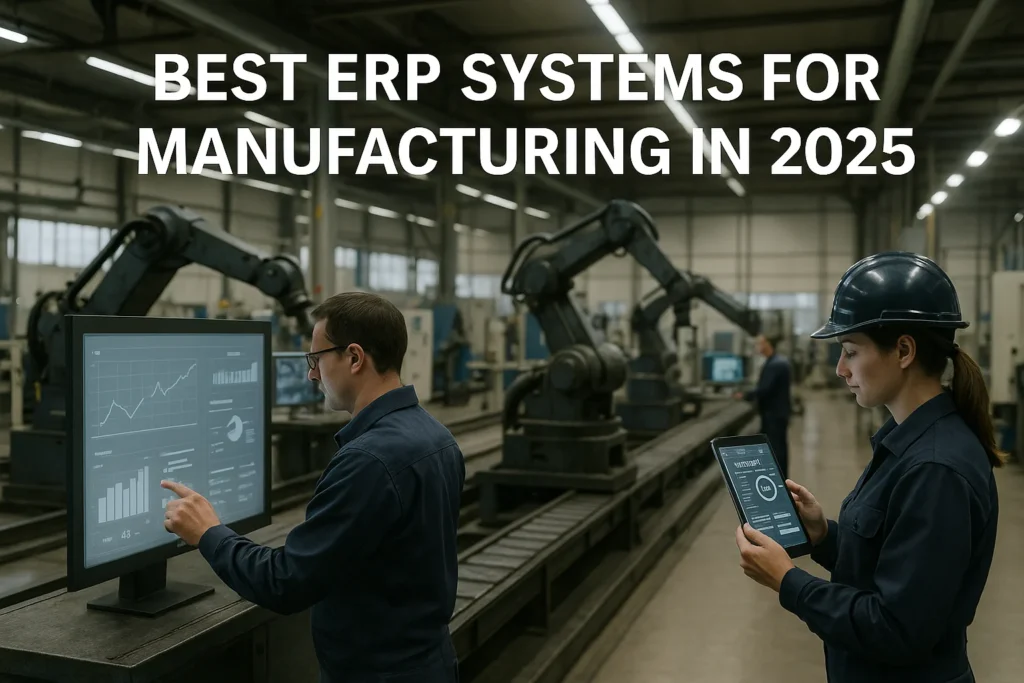
The manufacturing landscape in 2026 demands smarter, faster, and more connected operations than ever before. With supply chains becoming increasingly complex and customer expectations rising, manufacturers need powerful ERP systems for manufacturing to stay competitive. These digital workhorses integrate all aspects of production—from inventory and supply chain management to quality control and financials—into one streamlined system.
But with dozens of ERP solutions on the market, how do you choose the right one for your manufacturing business? This comprehensive guide examines the best ERP systems for manufacturing in 2026, comparing features, benefits, and ideal use cases to help you make an informed decision. Whether you run a small job shop or a multinational factory network, we’ve got you covered.
Why Manufacturing Companies Need Modern ERP Systems
The New Manufacturing Reality in 2026
Today’s manufacturers face unprecedented challenges:
- Supply chain volatility requiring real-time visibility
- Labour shortages necessitating automation
- Sustainability mandates demanding traceability
- Customisation trends requiring flexible production
Legacy systems simply can’t keep up. Modern ERP systems for manufacturing provide:
✅ Real-time operational visibility across multiple plants
✅ AI-driven forecasting to prevent stockouts/overstock
✅ Automated workflows that reduce human error
✅ Compliance tracking for quality and sustainability
The ERP Evolution: What’s New in 2026?
This year’s top systems offer breakthrough capabilities:
- Generative AI for predictive maintenance and demand planning
- Digital twin integration to simulate production scenarios
- Edge computing for faster shop-floor decision-making
- Blockchain-enabled supply chain transparency
Top 6 ERP Systems for Manufacturing in 2026
After evaluating dozens of platforms, these solutions stand out for their manufacturing-specific capabilities:
1. SAP S/4HANA: The Industrial Powerhouse
Best for: Large enterprises with complex operations
Why it leads:
- AI-powered production optimisation that learns from machine data
- Digital twin integration for virtual factory modelling
- Multi-plant coordination with real-time synchronisation
Use Case: A global automotive supplier reduced downtime 27% using SAP’s predictive maintenance.
2. Oracle NetSuite: The Agile Performer
Best for: Growing mid-market manufacturers
Standout Features:
- Built-in IoT monitoring for equipment tracking
- Customisable dashboards showing real-time KPIs
- Seamless eCommerce integration for D2C brands
Implementation Tip: Their rapid deployment templates get you live in under 90 days.
3. Microsoft Dynamics 365: The Smart Factory Enabler
Best for: Manufacturers embracing Industry 4.0
Key Advantages:
- Azure IoT Hub integration for equipment monitoring
- Mixed reality work instructions via HoloLens
- Power BI embedded analytics with natural language queries
Innovation Spotlight: A medical device maker cut training time 40% using AR work guides.
4. Infor CloudSuite Industrial: The Vertical Expert
Best for: Discrete manufacturers in specialised sectors
Vertical Strengths:
- Pre-configured solutions for aerospace, automotive, and industrial equipment
- Demand-driven MRP that auto-adjusts to market changes
- Multi-enterprise collaboration portals
Success Story: A heavy equipment manufacturer improved on-time deliveries by 33%.
5. Epicor Kinetic: The Shop Floor Specialist
Best for: Make-to-order and engineer-to-order operations
Shop Floor Wins:
- Machine learning quality control that detects defects
- Global trade compliance tools for exporters
- Mobile workbench for technicians
Impact: A precision machine reduced scrap rates by 19% in six months.
6. Chirix ERP: The Affordable Game Changer
Best for: SMBs needing quick ROI
Budget-Friendly Value:
- All-in-one platform with built-in CRM and HR
- Simple drag-and-drop configuration
- Mobile-first design for managers on the move
Deployment Advantage: Typical implementation takes just 4-6 weeks versus the industry average of 6+ months.
Key ERP Selection Criteria for 2026
Choosing the right system requires evaluating:
1. Must-Have Technical Capabilities
- Real-time production monitoring with IoT connectivity
- AI/ML-powered analytics for predictive insights
- Cloud-native architecture with hybrid deployment options
2. Implementation Considerations
📌 Data migration complexity from legacy systems
📌 Change management requirements for staff
📌 Vendor support responsiveness
3. Total Cost of Ownership
- Implementation costs (typically $50K-$500K+)
- Ongoing fees (look for per-user/month models)
- ROI timeline (most see payback in 12-18 months)
Future-Proofing Your ERP Investment
The manufacturing ERP landscape will see three key shifts:
1. AI Becomes Standard
Expect ERP systems to offer:
- Automated root cause analysis for quality issues
- Conversational interfaces for natural language queries
2. Sustainability Takes Centre Stage
New features will track:
- Carbon footprint across the supply chain
- Circular economy metrics for recycling/reuse
3. Edge Computing Grows
More processing will happen:
- At the machine level for instant decisions
- On mobile devices for field operations
Conclusion: Making Your 2026 ERP Choice
The right ERP system for manufacturing in 2026 will depend on your:
- Company size and growth trajectory
- Production complexity and industry vertical
- Digital maturity and workforce readiness
Action Steps:
- Shortlist 2-3 systems matching your needs
- Schedule demos focusing on your pain points
- Calculate TCO including hidden costs
- Plan change management for smooth adoption
For SMBs, Chirix ERP offers remarkable value, while enterprises may prefer SAP’s depth. Most manufacturers find Microsoft Dynamics 365 strikes the ideal balance.
Ready to transform your manufacturing operations? The right ERP decision today will drive your competitiveness for years to come.
Need Help Choosing?
Book a free consultation with our ERP experts to identify your ideal solution.
Insightful and well-structured blog. Clearly explains how ERP systems optimize manufacturing processes. A valuable read for industry professionals seeking efficiency and growth. Great job by the team!