
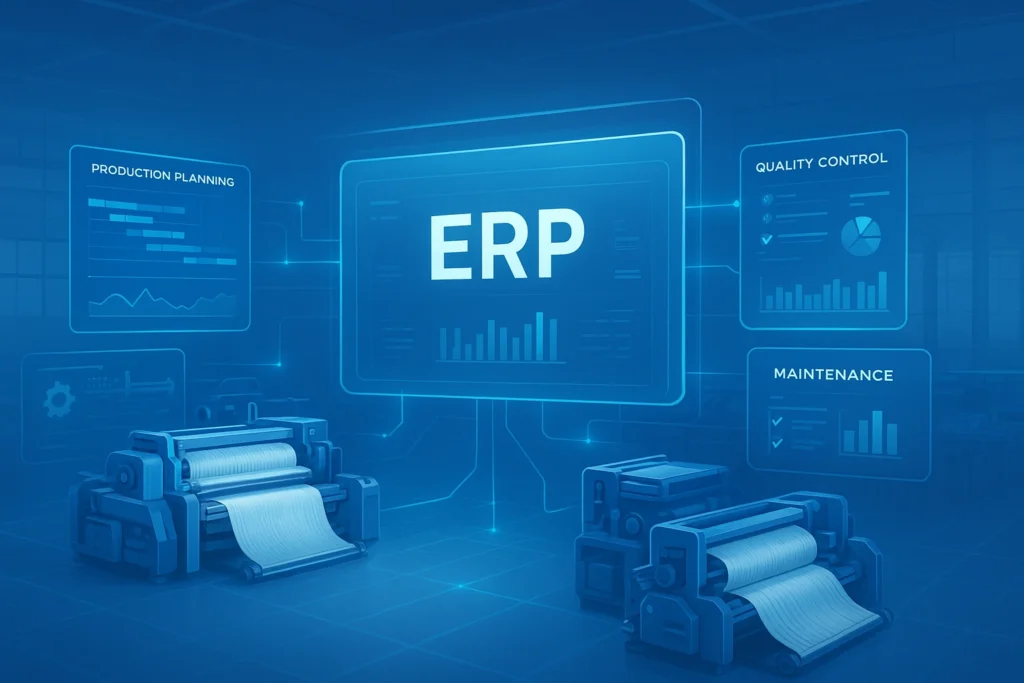
In today’s fast-moving manufacturing world, even a small inefficiency can become a massive drain on performance, productivity, and profit. Delayed orders, machine downtime, excess stock, and workflow gaps often lead to increased operational costs and unhappy customers.
To stay competitive, manufacturers must streamline operations and eliminate these outdated, manual processes. This is where a modern ERP system becomes a game-changer—offering complete real-time visibility, automation, and control over every part of the production cycle.
Below are the 7 most common manufacturing inefficiencies and how an ERP system can solve them once and for all.
1️⃣ Poor Production Planning and Scheduling
Manual planning methods often result in bottlenecks, idle equipment, resource conflicts, and delayed shipments. Production teams rely on outdated spreadsheets instead of real-time factory data.
How an ERP System Improves Scheduling
- Automated production planning and resource allocation
- Real-time visibility into machine availability and workloads
- Capacity planning to avoid bottlenecks
- Gantt charts and drag-and-drop schedule adjustments for supervisors
➡ Result: Smoother workflows, faster deliveries, and optimized machine utilization.
2️⃣ Excess Inventory and Stockouts
Overstocking increases carrying costs, while running out of critical materials halts production—both damage your bottom line.
ERP System for Real-Time Inventory Visibility
- Automated stock tracking with minimum/maximum reorder alerts
- Demand forecasting to reduce surplus
- Warehouse mapping with batch and lot tracking
- Accurate supply planning based on sales and production data
➡ Result: Right inventory, right time—reduced wastage and uninterrupted production.
3️⃣ Lack of Traceability Across the Supply Chain
When suppliers underperform or products fail quality checks, tracing the cause becomes difficult without centralized data.
ERP System for End-to-End Traceability
- Track materials from procurement to final dispatch
- Supplier performance monitoring and automated RFQs
- Complete audit trails for compliance and recalls
➡ Result: Faster problem resolution and stronger quality confidence.
4️⃣ High Production Errors and Rework Costs
Manual communication and outdated data increase the risk of mistakes—especially in highly technical manufacturing environments.
ERP System for Quality Control
- Built-in quality inspection checkpoints
- Automatic alerts for deviations from standards
- Real-time data captured directly from the shop floor
➡ Result: Higher first-pass yield, less rework, reduced scrap costs.
5️⃣ Slow and Inaccurate Reporting
If your managers still wait for Excel-based updates, decisions are always late and inconsistent with actual shop-floor conditions.
ERP System for Real-Time Analytics
- Custom dashboards and KPIs for production, finance, sales, etc.
- Automated reports—no manual spreadsheet entry
- Real-time performance monitoring
➡ Result: Faster decision-making backed by accurate data insights.
6️⃣ Machine Downtime and Poor Maintenance
Unplanned breakdowns can cost thousands per minute in lost production and emergency repairs.
Predictive Maintenance with ERP System
- Maintenance schedules based on machine usage and sensor inputs
- Asset lifecycle and spare parts tracking
- Preventive alerts before failure occurs
➡ Result: Longer machine lifespan and higher productivity output.
7️⃣ Disconnected Departments and Data Silos
Miscommunication between production, finance, procurement, and sales can delay the entire manufacturing workflow.
ERP System as a Single Source of Truth
- All departments access synchronized real-time data.
- Seamless approvals and workflow automation
- Strong collaboration from order receipt to shipment
➡ Result: Better teamwork, reduced errors, and improved order accuracy.
The Hidden Cost of Inefficiency
Even a 5% efficiency gap can cost millions annually in:
- Lost output
- Excess labor costs
- Customer churn due to delays
- Higher operational expenses
Manufacturers adopting an ERP system early enjoy long-term advantages:
✔ Faster delivery cycles
✔ Leaner operations
✔ Better profitability and customer satisfaction
Conclusion
Manufacturing inefficiencies are expensive—but preventable. A modern ERP system empowers manufacturers with complete operational control, stronger productivity, and real-time problem-solving.
If you’re ready to eliminate hidden costs and accelerate your factory performance, now is the time to invest in the right ERP solution.
📩 Looking to transform your manufacturing workflow?
Ask for a free ERP consultation or demo today!