
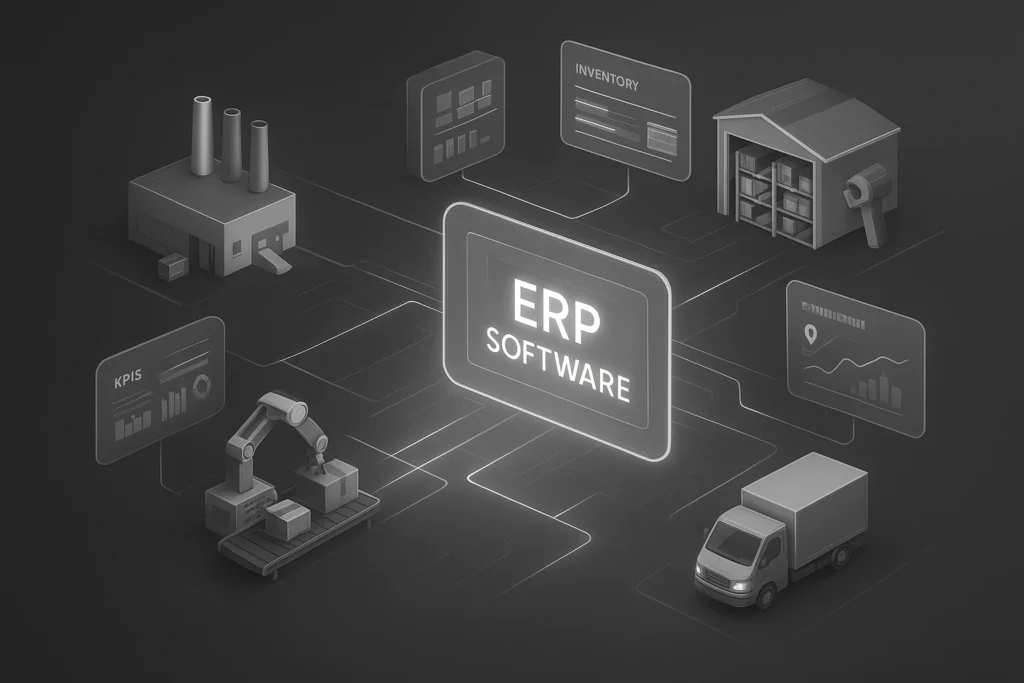
In today’s rapidly evolving business environment, efficiency is the key to growth. Whether you operate in manufacturing, textiles, logistics, retail, or any other sector, having the right ERP Software can transform how your business functions. It streamlines operations, automates workflows, enhances data visibility, and enables faster decision-making.
However, not all ERP systems are designed the same. Every industry has unique requirements — and choosing the wrong ERP can lead to poor user adoption, unnecessary costs, and operational disruptions. This guide will help you understand how to select the right ERP Software tailored to your industry needs.
Why Choosing the Right ERP Software Matters
ERP implementation is a long-term investment. Selecting the best-fit solution can:
- Boost productivity and eliminate manual tasks
- Improve operational accuracy and compliance
- Strengthen customer satisfaction and profitability
- Support your growth roadmap with scalability
On the other hand, the wrong ERP can become a burden — causing high implementation costs, employee frustration, and limited business results. That’s why selection must be strategic.
Key Factors to Consider When Selecting ERP Software
1️⃣ Understand Your Industry Requirements
Different industries run on different workflows. A textile factory’s priorities (like production planning, fabric tracking & machine integration) differ from a distributor’s focus on warehouse and transportation management.
Look for ERP Software that supports:
- Regulatory compliance for your sector
- End-to-end process automation
- Specialized reporting and analytics
- Rapid adaptation to market changes
Industry-specific ERP = faster ROI + smoother operations.
2️⃣ Cloud vs On-Premise ERP — Which is Better?
| Deployment | Benefits | Considerations |
|---|---|---|
| Cloud ERP | Lower upfront cost, easy access, quick upgrades | Internet reliance, subscription fees |
| On-Premise ERP | High control over data and infrastructure | Higher initial investment, IT resources required |
Choose based on your IT readiness, security preference, and scalability needs.
3️⃣ Must-Have ERP Modules for Every Business
Ensure the ERP includes essential modules such as:
- Finance & Accounting
- Inventory Control and Warehouse Management
- Production Planning & Scheduling
- CRM & Sales Order Automation
- Supply Chain & Procurement
- Quality and Compliance Management
- HR & Payroll (optional based on industry)
The more native modules your ERP Software provides, the fewer integrations and complexities you face later.
4️⃣ Ease of Use & User Adoption
A feature-rich ERP is wasted if employees find it complicated. Look for:
- Clean and intuitive interface
- Role-based dashboards
- Mobile application support
- Training resources & onboarding assistance
High usability = faster user adoption.
5️⃣ Customisation & Integration Capabilities
Your ERP should sync with existing systems like:
- Barcode/RFID solutions
- E-commerce portals
- Accounting tools
- MES, CRM, BI, IoT devices
API-friendly ERPs ensure seamless future expansion.
6️⃣ Security & Data Protection
With cyber threats rising, security cannot be compromised. Ensure:
- Data encryption at every stage
- Role-based access
- Backup and disaster recovery systems
A secure ERP protects both business operations and customer trust.
Evaluating ERP Vendors Smartly
Choose an Industry-Experienced Provider
Your vendor should understand industry workflows, jargon, and compliance needs. This leads to faster implementation and fewer errors.
Check Testimonials & Case Studies
See how similar businesses benefited from the solution.
Request Live Demos or Trial Access
Experience real workflows before making a decision.
Confirm Post-Implementation Support
Ensure strong technical guidance, timely upgrades, and service SLAs.
Cost Planning & Budgeting for ERP Software
Understand both one-time and recurring costs:
- Licensing or subscription
- Infrastructure (servers for on-premise)
- Customisation & integrations
- Data migration
- Training and support fees
Choose an ERP that balances budget with long-term ROI.
Why Industry-Specific ERP Software is a Smart Choice
✔ Built for your operational challenges
✔ Comes with relevant features by default
✔ Faster implementation with fewer customisations
✔ Better compliance & data accuracy
✔ Improves overall process automation
Whether you’re in textiles, manufacturing, retail, distribution, healthcare, or logistics, choosing a tailored ERP system ensures long-term success.
Step-by-Step Guide to Choosing the Right ERP Software
- Define business goals and KPIs
- Map core business processes
- Shortlist ERP vendors matching industry needs
- Evaluate features & compatibility
- Conduct demos + PoC (Proof of Concept)
- Check pricing, support, and contract terms
Follow this structured approach to pick a future-ready system.
Final Decision Checklist
Before you sign the deal, confirm:
- ✔ Does this ERP align with your industry processes?
- ✔ Will it support future growth?
- ✔ Are users comfortable with the system?
- ✔ Is the investment justified by ROI?
- ✔ Is the vendor reliable and supportive?
If most answers are “yes”, you have the right ERP Software.
Conclusion
Selecting the right ERP Software is a strategic move that impacts your efficiency and competitive edge. Every industry has specific needs, so choose a solution that aligns with your workflows — not the other way around. With the proper evaluation and expert guidance, your ERP implementation can drive scalability, productivity, and long-term success.