
The fashion industry is fast, dynamic, and constantly evolving. From seasonal launches to unpredictable consumer trends, fashion brands face immense pressure to manage their supply chains efficiently. A single delay in production, poor inventory visibility, or miscommunication with suppliers can lead to lost sales and damaged brand reputation.
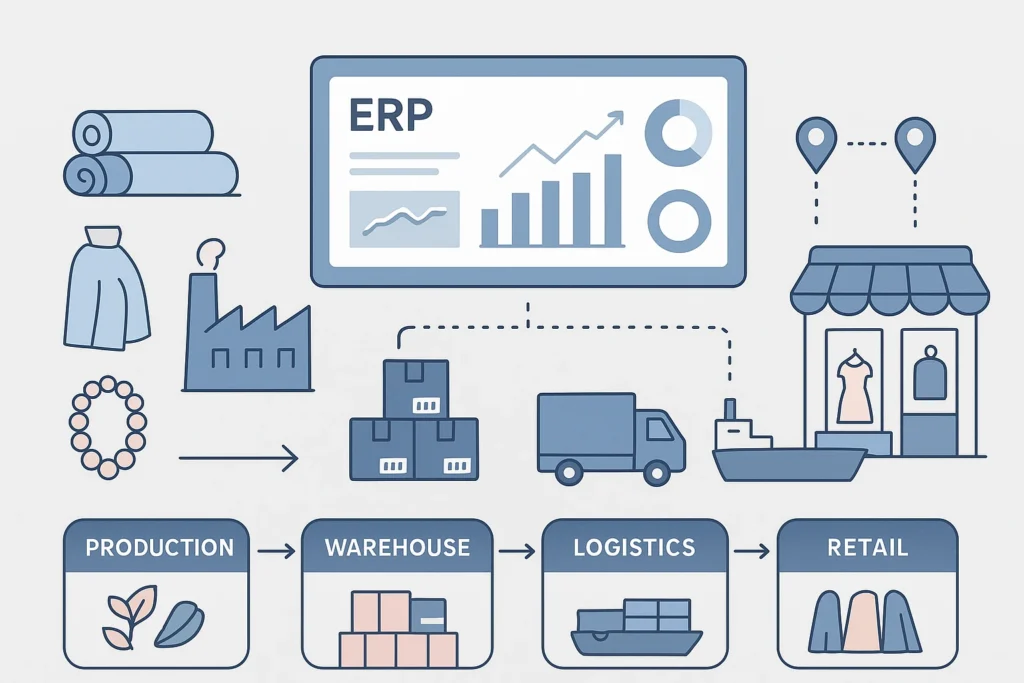
This is where ERP software becomes a game-changer. By connecting every part of the supply chain—procurement, inventory, production, logistics, and sales—ERP enables fashion brands to operate with speed, accuracy, and confidence. In this blog, we’ll explore how ERP software streamlines supply chain management for fashion brands, its key benefits, and why it’s an essential tool for staying competitive.
Why Supply Chain Management is Critical for Fashion Brands
Fast-Changing Trends and Consumer Demands
Fashion is trend-driven. A collection that’s in demand today might lose relevance tomorrow. Without a responsive supply chain, brands struggle to keep up with fast-moving consumer preferences.
Global Sourcing and Manufacturing Challenges
Fashion brands often source materials from multiple countries. Managing suppliers, production schedules, and compliance across regions is complex and time-sensitive.
Inventory Fluctuations and Seasonal Demands
From festive sales to seasonal launches, inventory must be managed with precision. Overstocking leads to waste, while understocking risks lost sales.
Pressure for Sustainable and Ethical Operations
Consumers increasingly demand sustainable fashion. Brands must maintain transparency in sourcing and ensure compliance with ethical standards, which adds more layers to supply chain management.
What is ERP Software and How Does It Help Fashion Brands?
Definition of ERP Software in Simple Terms
ERP (Enterprise Resource Planning) is a centralized system that integrates all core business processes into one platform—finance, sales, procurement, inventory, and supply chain.
Core ERP Modules Relevant to Supply Chain Management
- Inventory Management
- Procurement and Vendor Management
- Production Planning
- Logistics and Distribution
- Analytics and Reporting
Why ERP is Tailor-Made for the Fashion Industry
Fashion requires agility, fast turnarounds, and accurate demand forecasting. ERP helps brands align production with trends, maintain stock accuracy, and ensure smooth global operations.
Key Ways ERP Software Streamlines Supply Chain Management
Real-Time Inventory Tracking
ERP gives fashion brands complete visibility of stock across warehouses, retail stores, and online platforms. This prevents overstocking, reduces dead stock, and ensures customers get what they want—when they want it.
Smarter Procurement and Vendor Management
ERP automates purchase orders and helps manage supplier relationships. Brands can track supplier performance, ensure timely deliveries, and negotiate better deals.
Efficient Production Planning
With ERP, production schedules align with demand forecasts. This minimizes delays, reduces costs, and ensures collections are launched on time.
Logistics and Distribution Optimization
ERP optimizes order fulfillment by managing shipping routes, tracking deliveries, and ensuring smooth last-mile logistics. This means faster delivery and happier customers.
Data-Driven Decision Making
ERP’s built-in analytics provide actionable insights. Brands can predict demand, identify inefficiencies, and respond quickly to market changes—all from a single dashboard.
ERP and Sustainability in the Fashion Supply Chain
Reducing Waste with Better Resource Planning
ERP helps minimize material waste by forecasting demand more accurately and planning resources efficiently.
Tracking Ethical Sourcing and Compliance
Brands can monitor supplier certifications, ensure ethical sourcing, and stay compliant with international standards.
Supporting Circular Fashion Models
ERP enables brands to track returns, repairs, and recycling, making it easier to adopt sustainable business models.
Case Study Examples – Fashion Brands Leveraging ERP
- Global Fast-Fashion Brand: Reduced lead time from 90 to 30 days using ERP-driven supply chain visibility.
- Sustainable Fashion Label: Used ERP to track raw material sourcing and achieved 100% supply chain transparency.
- Local Apparel Startup: Scaled operations and managed seasonal demand fluctuations effectively with ERP.
Choosing the Right ERP Software for Your Fashion Brand
Features to Look For
- Scalability for growing operations.
- Seamless integration with eCommerce platforms and POS systems.
- Easy-to-use dashboards for teams.
Cloud vs. On-Premise ERP Solutions
Cloud ERP offers flexibility, cost-effectiveness, and remote access, making it ideal for fast-moving fashion businesses.
Industry-Specific ERP Systems for Fashion
Fashion-focused ERP solutions come with features like size/color matrix, style tracking, and seasonal planning tools.
Final Thoughts
In today’s competitive fashion landscape, ERP software is no longer optional—it’s essential. It connects every link in the supply chain, helping brands reduce costs, improve efficiency, and deliver faster while staying sustainable.
By adopting ERP, fashion brands can transform their supply chain from a complex challenge into a competitive advantage. Whether you’re a global label or a growing boutique brand, ERP ensures you stay ahead of trends and meet customer expectations with ease.
Ready to streamline your fashion supply chain? Explore ERP solutions tailored to your brand’s needs today.