
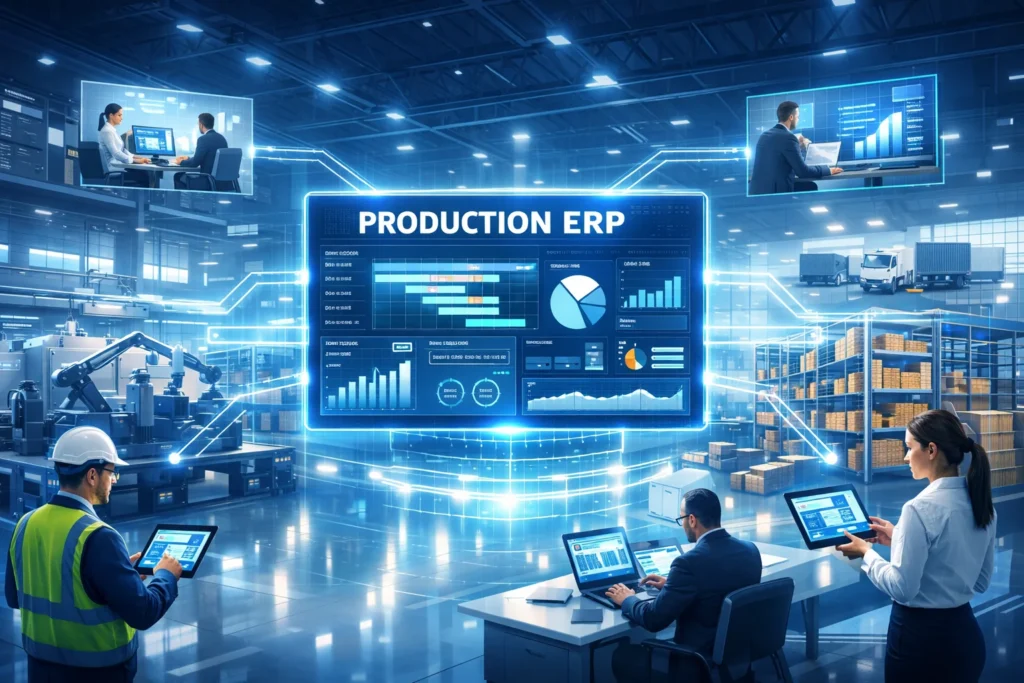
Manufacturing businesses today are under constant pressure to produce faster, reduce costs, and maintain consistent product quality. At the same time, operations are becoming more complex. Managing production schedules, raw materials, inventory levels, suppliers, and finances across multiple systems can quickly create confusion and inefficiencies.
Many manufacturers still rely on spreadsheets or disconnected tools to manage their operations. While this may work for a small setup, it becomes difficult to scale as production grows. Delayed production schedules, inaccurate inventory data, and poor coordination between departments can slow down the entire business.
This is where production ERP software makes a major difference.
A modern production ERP system connects your manufacturing processes—from production planning and inventory management to procurement, finance, and reporting—into one centralized platform. It provides real-time visibility across the organization and helps teams work more efficiently.
But with so many ERP options available today, choosing the right solution can feel overwhelming.
In this guide, we’ll explain how production ERP software works, the key features to look for, and the most important factors to consider when selecting the best ERP solution for your manufacturing business.
What Is Production ERP Software?
Understanding Production ERP Software
Production ERP software is a specialized enterprise resource planning system designed specifically for manufacturing companies. It integrates multiple business processes such as production planning, inventory management, procurement, quality control, and financial management into a single system.
Instead of managing different operations in separate tools, manufacturers can use production ERP software to coordinate their entire workflow from one centralized platform.
This improves efficiency, reduces manual work, and ensures accurate information across departments.
How Production ERP Software Works
Production ERP software acts as the central hub for all manufacturing activities. Every department—from production and inventory to finance and sales—shares the same database.
For example, when a new customer order is placed, the ERP system can automatically:
- Check raw material availability
- Generate production work orders
- Schedule machines and resources
- Update inventory levels
- Notify procurement if materials are low
This level of automation helps manufacturers reduce delays, minimize errors, and maintain smoother production operations.
Core Modules of Production ERP Software
Most production ERP solutions include several important modules that support manufacturing processes.
Common modules include:
- Production planning and scheduling
- Bill of Materials (BOM) management
- Inventory and warehouse management
- Procurement and supplier management
- Quality control management
- Finance and accounting
- Reporting and analytics
These modules work together to give manufacturers complete visibility into their operations.
Why Manufacturing Businesses Need Production ERP Software
Eliminating Operational Silos
In many manufacturing companies, departments operate independently using different systems. Production teams, inventory managers, finance departments, and sales teams often work with separate data.
This lack of integration can cause communication gaps and inaccurate information.
Production ERP software solves this problem by connecting all departments within one platform. Everyone works with the same real-time data, improving collaboration and decision-making.
Improving Production Planning and Scheduling
Efficient production planning is critical for meeting customer demands.
Production ERP software helps manufacturers automate production schedules, allocate resources efficiently, and optimize machine usage. This ensures that production runs smoothly without unnecessary downtime.
Enhancing Inventory Visibility
Poor inventory management is one of the biggest challenges in manufacturing.
Too little inventory can delay production, while excess inventory increases storage costs.
Production ERP software provides real-time inventory tracking, allowing businesses to monitor raw materials, work-in-progress items, and finished goods accurately.
Supporting Data-Driven Decision Making
Modern ERP systems provide dashboards and reports that give managers real-time insights into production performance.
This data helps businesses identify inefficiencies, improve resource allocation, and make better strategic decisions.
Key Features to Look for in the Best Production ERP Software
Choosing the right production ERP software requires evaluating the features that directly support manufacturing operations.
Production Planning and Scheduling
A strong production planning module helps manufacturers manage work orders and allocate resources efficiently.
Important capabilities include:
- Automated production scheduling
- Work order management
- Machine capacity planning
- Resource allocation tools
These features help ensure that production processes run efficiently.
Bill of Materials (BOM) Management
The Bill of Materials defines the components required to manufacture a product.
Production ERP software should support:
- Multi-level BOM structures
- Product configuration management
- Engineering change management
- Production routing management
Accurate BOM management ensures smooth production workflows.
Inventory and Warehouse Management
Inventory management features are essential for maintaining the right stock levels.
Look for production ERP software that provides:
- Real-time inventory tracking
- Batch and lot tracking
- Barcode integration
- Automated stock alerts
These capabilities improve warehouse efficiency and reduce inventory errors.
Quality Management
Maintaining consistent product quality is crucial for manufacturers.
Production ERP software should include tools for:
- Quality inspections
- Defect tracking
- Compliance management
- Quality reporting
These features help manufacturers maintain high product standards.
Real-Time Reporting and Analytics
Manufacturers rely on data to monitor performance and improve operations.
ERP systems should offer:
- Production performance dashboards
- Cost analysis reports
- Manufacturing KPIs
- Customizable reporting tools
This allows managers to identify opportunities for improvement.
Integration with Other Systems
Manufacturers often use multiple software tools for different business functions.
Production ERP software should integrate with systems such as:
- Customer relationship management (CRM) tools
- Accounting software
- Supply chain management systems
- E-commerce platforms
Integration ensures smooth data flow across the organization.
Important Factors to Consider When Choosing Production ERP Software
Selecting the right ERP solution involves more than just comparing features.
Manufacturing Industry Fit
Not all ERP systems are designed for manufacturing businesses.
Choose production ERP software that supports manufacturing-specific processes such as production planning, shop floor control, and BOM management.
Scalability for Future Growth
Your ERP system should grow with your business.
As production increases or your company expands to multiple locations, the ERP software should be able to handle higher workloads and additional users.
Customization and Flexibility
Every manufacturing business has unique workflows.
Production ERP software should allow customization to match your production processes and operational requirements.
Ease of Use
User adoption is essential for successful ERP implementation.
Choose a system with a clean interface, intuitive dashboards, and simple navigation so employees can quickly learn and use the system effectively.
Cloud vs On-Premise Deployment
Manufacturers can choose between cloud-based ERP systems and traditional on-premise solutions.
Cloud ERP solutions are becoming increasingly popular because they offer:
- Lower infrastructure costs
- Remote access
- Automatic updates
- Faster implementation
However, some businesses may prefer on-premise systems for greater control.
Common Mistakes to Avoid When Choosing Production ERP Software
Selecting Software Based Only on Price
Cost is important, but choosing ERP software purely based on price can lead to long-term limitations.
Focus on value, functionality, and scalability rather than just the initial cost.
Ignoring Manufacturing-Specific Features
Some ERP systems are designed for general business management rather than manufacturing.
Make sure the software includes production planning, inventory tracking, and shop floor management capabilities.
Underestimating Implementation Planning
ERP implementation requires proper planning, employee training, and workflow adjustments.
Working with an experienced ERP provider can make the transition much smoother.
Not Planning for Future Growth
An ERP system should support long-term business growth.
Choosing a scalable production ERP software solution ensures that your system remains effective as your operations expand.
Steps to Choose the Right Production ERP Software
1. Identify Your Business Requirements
Start by analyzing your current manufacturing processes and identifying areas where improvements are needed.
2. Create a Feature Checklist
List the essential ERP features your business requires, such as production planning, inventory management, and reporting.
3. Research ERP Vendors
Look for ERP providers that specialize in manufacturing solutions.
Evaluate their experience, product capabilities, and customer feedback.
4. Request Product Demonstrations
ERP demonstrations allow you to see how the system works in real-world production scenarios.
Test workflows, reporting features, and usability during the demo.
5. Evaluate Total Cost of Ownership
Consider the full cost of implementing the ERP system, including:
- Software licensing
- Implementation costs
- Employee training
- Ongoing maintenance
Understanding the total cost helps ensure a better investment decision.
Benefits of Implementing the Right Production ERP Software
When implemented correctly, production ERP software can transform manufacturing operations.
Key benefits include:
- Increased production efficiency
- Reduced operational costs
- Improved inventory accuracy
- Better supply chain coordination
- Faster decision-making with real-time data
- Higher customer satisfaction through timely deliveries
These advantages make ERP systems a critical tool for modern manufacturing businesses.
Final Thoughts
Choosing the right production ERP software is a strategic decision that can significantly impact your manufacturing efficiency and business growth.
The right ERP system helps manufacturers streamline production processes, manage inventory more effectively, improve collaboration between departments, and gain valuable operational insights.
By carefully evaluating your business needs, comparing ERP solutions, and focusing on manufacturing-specific features, you can select a system that supports both your current operations and future expansion.
Investing in the right production ERP software is not just about upgrading technology—it’s about building a smarter, more efficient manufacturing business.