
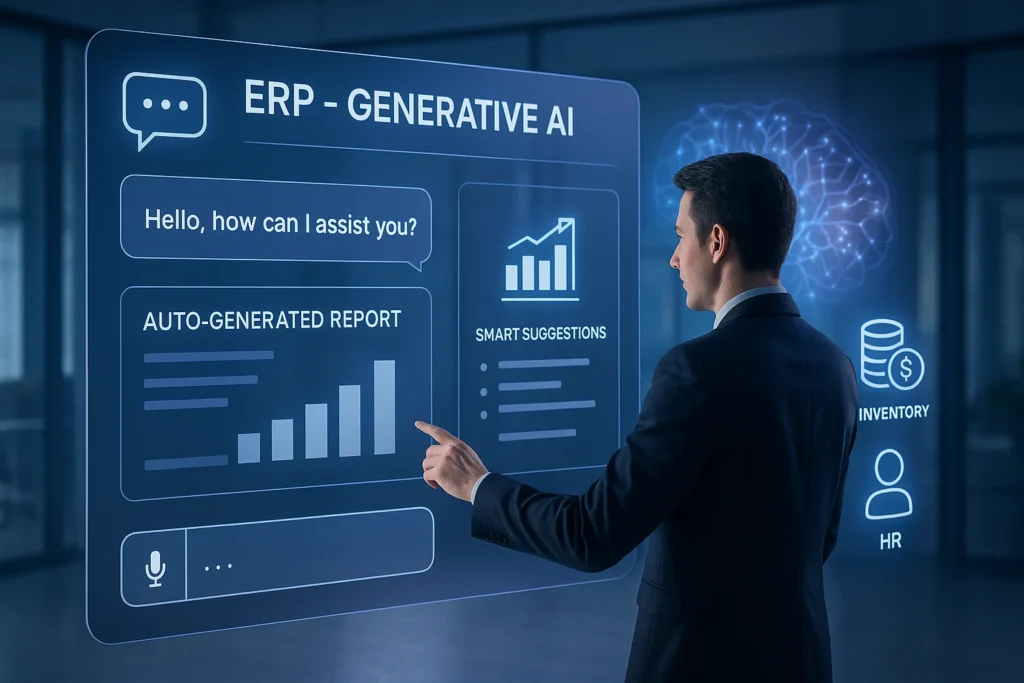
Enterprise Resource Planning (ERP) systems are the backbone of modern businesses, streamlining operations from finance to supply chain management. But with the rise of generative AI, ERP is undergoing a seismic shift—moving from static data processing to intelligent, conversational, and predictive systems.
Imagine asking your ERP, “What were last quarter’s top-selling products, and what’s the forecast for next month?” —and getting an instant, accurate response in natural language. Thanks to AI in ERP, particularly ChatGPT-like features, this is now a reality.
From automating reports to optimising supply chains, generative AI is making ERP systems smarter, faster, and more user-friendly. In this blog, we’ll explore:
- How AI-powered ERP works
- Key benefits and real-world use cases
- Challenges to consider
- The future of AI-driven enterprise software
What Is Generative AI in ERP?
Generative AI refers to artificial intelligence that can create text, analyse data, and make decisions based on patterns in large datasets. When integrated into ERP systems, it enables:
- Natural language processing (NLP)—Users interact with ERP via chat or voice.
- Predictive analytics – AI forecasts trends in sales, inventory, and finances.
- Automated content generation – Instant reports, summaries, and recommendations.
How ChatGPT-like Features Enhance ERP Systems
ChatGPT’s conversational abilities are now being embedded into ERP platforms, allowing:
✅ Voice & text-based queries—Instead of complex menus, users ask, “Show me pending invoices.”
✅ Automated customer support—AI chatbots resolve ERP-related questions instantly.
✅ Real-time data insights—AI analyses trend and suggests actions (e.g., “Reorder stock for Product X”).
Key Benefits of AI in ERP
1. Improved Operational Efficiency
- Faster data retrieval—No more digging through spreadsheets; just ask the AI.
- Reduced manual errors—Automation minimises human input mistakes.
2. Enhanced Decision-Making with Predictive Insights
- AI-driven forecasting—Predicts demand, cash flow, and supply chain disruptions.
- Anomaly detection—Flags fraud, inefficiencies, or inventory shortages in real time.
3. Better User Experience with Conversational AI
- No technical expertise needed – Employees interact naturally instead of learning complex ERP navigation.
- Personalised dashboards—AI tailors insights based on user roles (e.g., finance vs. operations).
4. Cost Savings & Scalability
- Lower labour costs—AI handles repetitive tasks like data entry and report generation.
- Future-proof growth—AI adapts as business needs evolve.
Use Cases of Generative AI in ERP
1. Automated Financial Reporting & Analysis
- AI generates profit & loss statements, cash flow forecasts, and compliance reports in seconds.
2. Intelligent Supply Chain Optimisation
- Predicts demand fluctuations and suggests optimal procurement strategies.
- Automates purchase orders when stock runs low.
3. AI-Powered Customer Relationship Management (CRM)
- Chatbots handle customer enquiries, process returns, and upsell products within the ERP.
- Sentiment analysis detects unhappy customers for proactive service.
4. HR & Workforce Management
- AI assists in recruitment, onboarding, and answering employee FAQs (e.g., “How much leave do I have left?”).
Challenges & Considerations for AI in ERP
1. Data Privacy & Security Risks
- Ensuring GDPR/CCPA compliance when AI processes sensitive data.
- Protecting against AI model biases and cyber threats.
2. Integration Complexity
- Legacy ERP systems may need upgrades to support AI.
- Cloud vs. on-premise AI deployment decisions.
3. Change Management & User Adoption
- Employees may resist AI-driven workflows—training is key.
- Balancing automation with human oversight.
The Future of AI in ERP
The next wave of AI in ERP includes:
🚀 Hyper-automation – AI + IoT sensors for real-time supply chain adjustments.
🚀 Self-learning ERPs – Systems that adapt based on business patterns.
🚀 Ethical AI governance—Ensuring transparency and fairness in AI decisions.
Conclusion
Generative AI is revolutionising ERP, turning rigid systems into intelligent, conversational partners. Businesses that adopt ChatGPT-like AI features will gain:
✔ Faster decision-making
✔ Lower operational costs
✔ A competitive edge
Is your ERP ready for AI? Explore AI-powered ERP solutions today and stay ahead of the curve!
The valuable information that you have shared about AI related is helpful for us. Subscribed your blog.