

Introduction
Choosing the right Enterprise Resource Planning (ERP) system is one of the most critical decisions a growing business will make. The choice often comes down to two options: ERP Customisation or Out-of-the-Box ERP. Each has its own benefits and drawbacks, and the best solution depends on your business size, industry, and specific operational needs. In this blog, we’ll explore the key differences, advantages, and ideal use cases for both approaches, helping you make an informed ERP investment.
What is ERP Customisation?
Definition and Scope
ERP Customisation refers to modifying the core functionality of an ERP system to align precisely with your business’s unique workflows and requirements. This goes beyond simple configuration and often involves code-level changes or building entirely new modules.
Examples of ERP Customisation
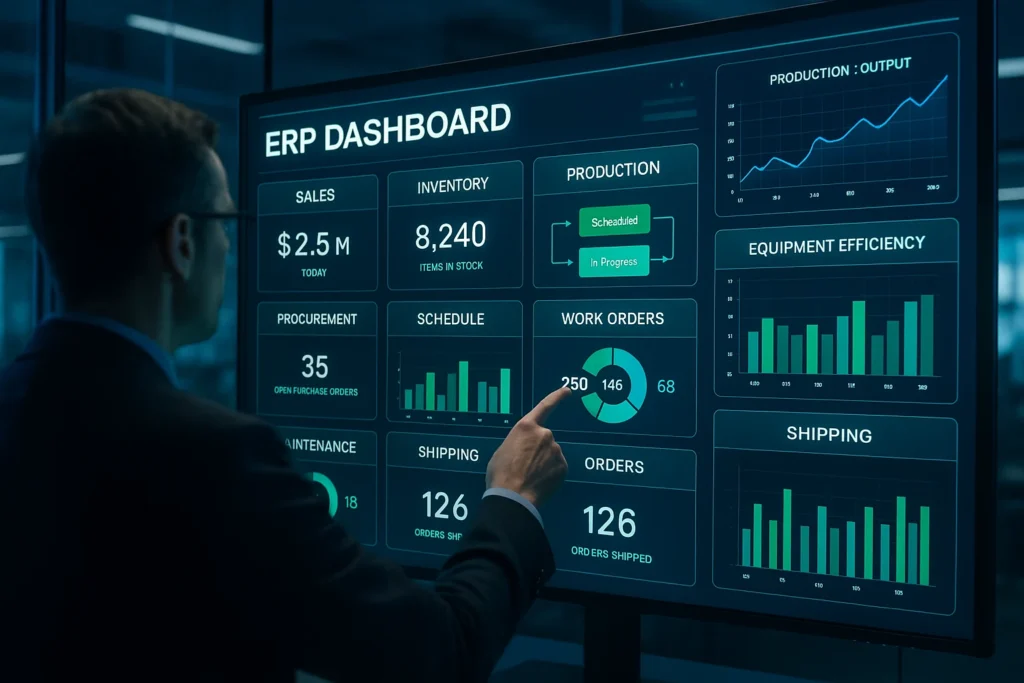
- Custom-built dashboards tailored to different user roles
- Unique workflows for manufacturing, logistics, or compliance
- Integration with proprietary tools or external platforms
- Automated alerts or approval hierarchies based on internal logic
What is an Out-of-the-Box ERP Solution?
Key Features of Standard ERP
Out-of-the-box ERP solutions come pre-packaged with modules for finance, HR, inventory, sales, and more. These solutions are designed to meet the standard needs of a wide range of industries.
Pros and Cons
Pros:
- Quick implementation
- Lower upfront cost
- Vendor-provided support and training
Cons:
- Limited flexibility
- Might not address unique industry needs
- Customisation can lead to compatibility issues with updates.
ERP Customisation vs. Out-of-the-Box ERP: Key Differences
Flexibility and Scalability
Custom ERP systems offer unmatched flexibility and can evolve with your business. In contrast, out-of-the-box solutions may struggle to adapt as your processes become more complex.
Cost Considerations
Customisation often requires a higher initial investment for development and testing. However, the long-term ROI can be significant due to improved efficiency and better alignment with business goals.
Time to Implement
Ready-made ERP systems can be deployed in weeks, while customised ones may take several months. The trade-off is the depth of functionality and fit for your specific needs.
Maintenance and Updates
Standard ERP solutions are easier to update but may break if too many customisations are layered on. Custom ERP systems may require dedicated maintenance and developer support.
When is ERP Customisation the Right Choice?
Industry-Specific Needs
Industries like manufacturing, pharmaceuticals, or logistics often have complex, non-standard processes that require tailored ERP functionalities.
Complex Internal Processes
If your business has unique workflows, approval chains, or compliance requirements, a customised ERP system can be designed around those specifics.
Long-Term Digital Transformation Strategy
Custom ERP is ideal for companies looking to build a long-term tech foundation that supports evolving needs, integrations, and innovations.
When Should You Choose an Out-of-the-Box ERP?
Small to Mid-Sized Businesses
If your business operates on standard workflows and has budget constraints, a preconfigured ERP solution is more accessible and cost-effective.
Fast Deployment Requirements
For startups or businesses with pressing go-live deadlines, out-of-the-box ERP systems offer a quick turnaround.
Standard Business Processes
Companies with simple, predictable processes—such as basic inventory tracking or payroll—may find out-of-the-box systems perfectly adequate.
Hybrid Approach: Configuring Standard ERP with Minimal Customisation
Some businesses opt for a hybrid model—starting with a standard ERP solution and layering minor customisations as needs evolve. This approach allows a balance of cost, speed, and flexibility.
How to Decide: A Customisation Checklist
- Do you have unique operational workflows?
- What’s your budget for ERP implementation and maintenance?
- How quickly do you need to deploy the system?
- Do you have in-house IT expertise or partners to support customisation?
- Will your ERP need to scale or integrate with other tools in the future?
Final Thoughts: Choosing the Right ERP Path
ERP Customisation and out-of-the-box ERP solutions both offer significant benefits—but choosing the right path depends on your business goals, complexity, and growth strategy. Evaluate your operational needs carefully and consider both short-term implementation and long-term scalability before committing to an ERP solution.
Whether you opt for a customised ERP or a standard one, the ultimate goal remains the same: boosting efficiency, productivity, and decision-making across your organisation.