
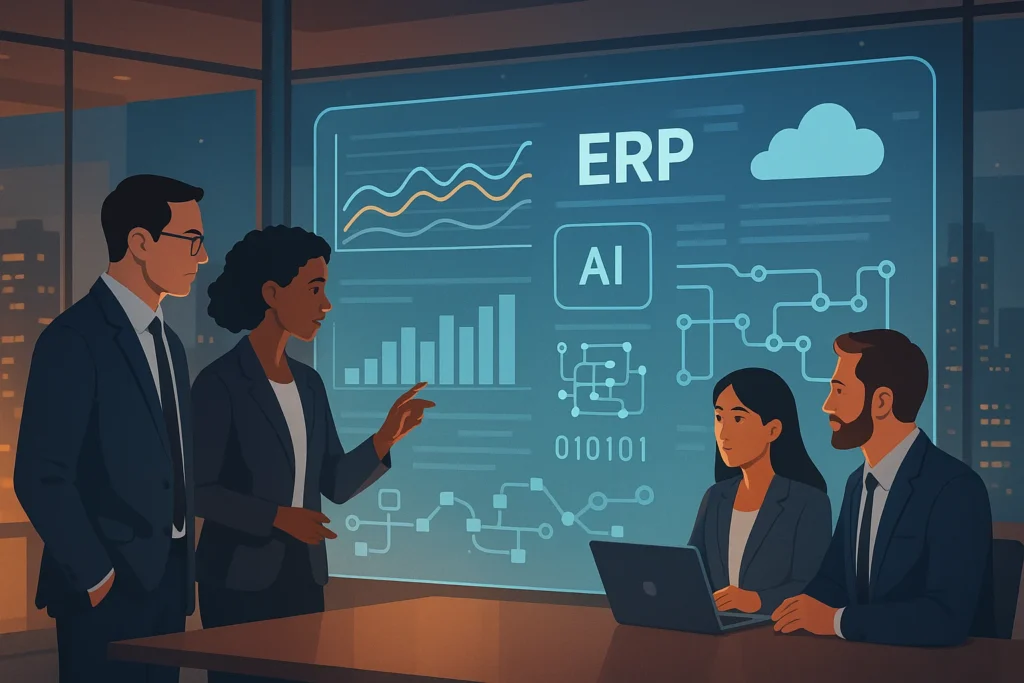
The digital landscape is evolving at an unprecedented pace, and businesses must adapt or risk falling behind. In 2025, digital transformation is no longer a luxury—it’s a necessity. At the core of this shift lies a powerful tool: Enterprise Resource Planning (ERP) systems. These systems have transitioned from simple back-office tools to intelligent platforms driving innovation across entire organisations.
In this blog, we explore how ERP systems drive digital transformation in 2025 and reshape business operations through cutting-edge technologies like AI, cloud computing, and automation.
Understanding the Role of ERP in Modern Business
What is an ERP System in 2025?
ERP systems are integrated software platforms that manage core business functions like finance, HR, inventory, procurement, and customer service. By 2025, ERP systems are smarter, more connected, and more agile than ever before. Cloud-native architectures, AI-powered analytics, and seamless integrations are now standard features.
Why ERP Is a Core Component of Digital Transformation
Digital transformation involves overhauling business processes through digital technologies. ERP systems are the foundation of this transformation, enabling:
- Centralised data management
- Real-time visibility into operations
- Automated workflows
- Improved collaboration across departments
Key Ways ERP Systems Drive Digital Transformation in 2025
AI-Powered Decision Making
ERP platforms now integrate machine learning and AI algorithms to provide predictive insights. Businesses can forecast demand, detect anomalies, and optimise processes in real time, leading to smarter decisions and faster responses.
Cloud-Based ERP Adoption
Cloud ERP solutions offer unmatched scalability and accessibility. With remote work and global teams becoming the norm, cloud ERP ensures employees can access data securely from anywhere, anytime.
Hyperautomation and Workflow Streamlining
ERP systems in 2025 feature built-in automation tools and robotic process automation (RPA) that streamline repetitive tasks. This results in higher efficiency and reduced human error.
Enhanced User Experience with Personalisation
Modern ERP platforms prioritise user-centric design. Intuitive dashboards, mobile access, and personalised interfaces enhance user adoption and engagement.
Integration with IoT, Blockchain, and Big Data
Connected devices feed real-time data into ERP systems, enhancing operational visibility. Blockchain ensures secure, tamper-proof transactions, while big data analytics enables strategic planning and forecasting.
Industry-Wise Impact of ERP on Digital Transformation
Manufacturing
Smart factories powered by ERP can track production in real time, monitor machine performance, and optimise resource allocation.
Retail and E-commerce
Retailers use ERP to manage inventory across multiple channels, streamline order fulfilment, and deliver consistent customer experiences.
Healthcare
ERP supports regulatory compliance, patient data management, and resource planning, improving care delivery and operational efficiency.
Logistics and Supply Chain
From real-time tracking to route optimisation, ERP systems improve logistics efficiency and reduce costs across the supply chain.
Benefits of Embracing ERP Systems for Digital Transformation in 2025
- Streamlined operations and increased productivity
- Real-time insights and improved decision-making
- Enhanced customer experience and satisfaction
- Greater scalability and business agility
- Reduced operational costs and manual effort
Challenges to Address in ERP-Led Digital Transformation
- High initial implementation costs
- Need for employee training and change management
- Data migration and integration complexities
- Ensuring data privacy and compliance
Choosing the Right ERP System in 2025
Must-Have Features for a Future-Ready ERP
- AI and machine learning capabilities
- Cloud-native infrastructure
- Seamless third-party integrations
- Customisable and mobile-friendly interface
How to Evaluate ERP Vendors for Digital Transformation Goals
- Industry expertise and support track record
- Customer reviews and case studies
- Implementation and training support
- Long-term roadmap and innovation pipeline
Real-World Examples: ERP Driving Digital Transformation
Case Study 1: Manufacturing Company
A mid-sized manufacturing firm adopted a cloud ERP system to unify its operations. Within six months, it reduced production delays by 30% and improved forecasting accuracy by 45%.
Case Study 2: Retail Business
An e-commerce brand implemented an AI-powered ERP platform to manage its growing inventory and customer base. The result: a 25% increase in order fulfilment efficiency and a 15% rise in customer retention.
Conclusion
As businesses navigate the challenges and opportunities of 2025, ERP systems emerge as the cornerstone of successful digital transformation. From AI-driven insights to seamless cloud integration, ERP empowers companies to innovate, adapt, and grow in a digital-first world.
Ready to embrace the future? Explore our ERP solutions designed for the digital age and transform the way you do business.
Frequently Asked Questions (FAQ)
ERP systems centralise data, automate workflows, and enable informed decision-making, forming the backbone of digital transformation.
Modern ERP platforms incorporate AI, machine learning, cloud technology, and real-time analytics to drive smarter business operations.
Yes. Cloud ERP offers scalability, accessibility, and lower upfront costs, making it ideal for businesses pursuing digital transformation.
Manufacturing, retail, healthcare, and logistics are among the top industries leveraging ERP for efficiency and innovation.
Insightful and forward-thinking post! This blog clearly explains how ERP systems are pivotal in driving digital transformation and business efficiency in 2025. Great read!