
Manufacturing businesses today face increasing pressure to deliver products faster, manage inventory efficiently, and maintain profitability. When operations rely on disconnected systems, spreadsheets, or manual processes, inefficiencies quickly appear across production, inventory, finance, and supply chain management.
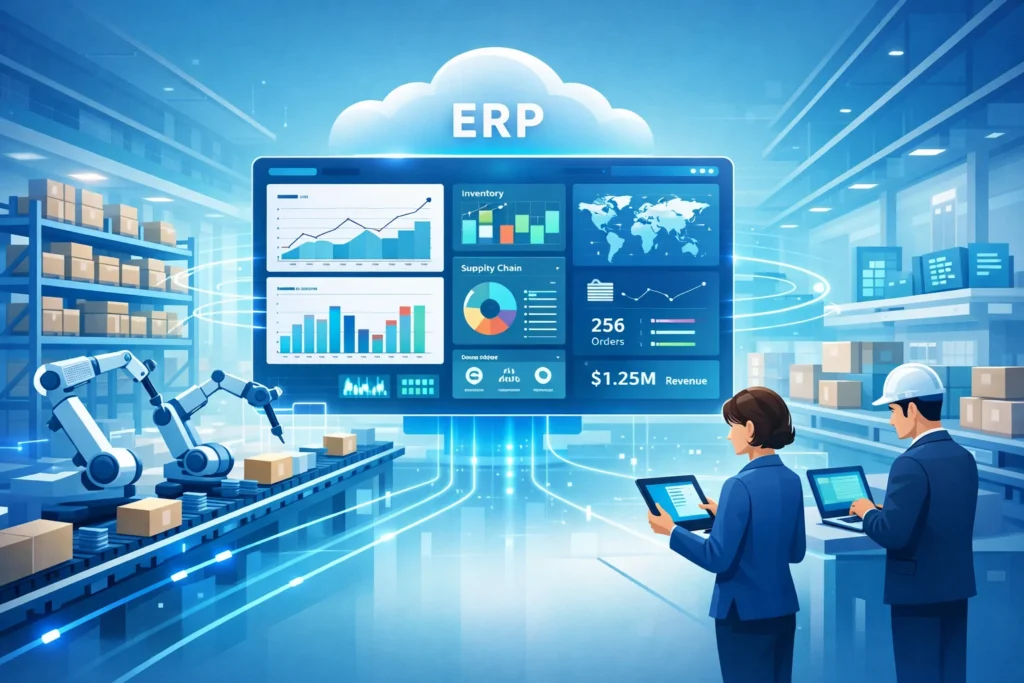
This is where Enterprise Resource Planning (ERP) software becomes essential. ERP integrates all business processes into one centralised platform, providing real-time data, automation, and improved decision-making.
If your manufacturing company is struggling with operational inefficiencies, here are seven clear signs that it’s time to implement ERP software.
1. Your Business Still Relies on Spreadsheets for Critical Operations
Many manufacturing companies begin with spreadsheets to track production schedules, inventory levels, and financial records. While spreadsheets may work for small operations, they quickly become inefficient as the business grows.
Common issues include:
- Data duplication and errors
- Lack of real-time updates
- Difficulty sharing accurate information across departments
- Limited scalability
ERP software replaces scattered spreadsheets with a centralised database where all departments can access accurate and updated information.
2. Inventory Management Is Difficult to Track
Inventory problems are one of the biggest challenges for manufacturers. Without a proper system, companies often experience the following:
- Overstocking that increases storage costs
- Stockouts that delay production
- Inaccurate inventory counts
- Poor demand forecasting
ERP systems provide real-time inventory tracking, automated stock updates, and better demand forecasting, ensuring that the right materials are available when needed.
3. Production Planning Feels Disorganised
When production schedules are managed manually, it becomes difficult to coordinate machines, labour, and materials efficiently.
Signs of poor production planning include:
- Missed delivery deadlines
- Production bottlenecks
- Unbalanced workloads across teams
- Frequent last-minute schedule changes
ERP software helps manufacturers plan production more effectively by integrating production schedules, resource allocation, and order management into one system.
4. Data Is Scattered Across Multiple Systems
Many manufacturing businesses use separate tools for accounting, inventory management, procurement, and sales. These disconnected systems create data silos and make it difficult to get a complete view of operations.
Problems caused by fragmented systems include:
- Inconsistent data across departments
- Manual data entry between systems
- Limited reporting capabilities
- Slow decision-making
ERP software eliminates these issues by connecting all business functions into a single integrated platform.
5. Financial Reporting Takes Too Long
Accurate financial reporting is essential for business growth. However, when financial data is spread across multiple systems, generating reports becomes time-consuming and prone to errors.
Common financial challenges include:
- Delayed financial reports
- Difficulty tracking costs and profitability
- Limited visibility into cash flow
- Manual reconciliation processes
ERP software integrates finance with other business functions, enabling real-time financial reporting and better cost control.
6. Communication Between Departments Is Inefficient
In manufacturing businesses, departments such as procurement, production, inventory, and sales must work closely together. Without a unified system, communication gaps often occur.
These gaps can lead to:
- Misaligned production plans
- Delayed order fulfilment
- Confusion about inventory availability
- Reduced operational efficiency
ERP software improves collaboration by ensuring all departments access the same real-time information.
7. Your Business Is Growing Faster Than Your Systems
Growth is a positive sign for any manufacturing company, but outdated systems can quickly become a bottleneck.
As your business expands, you may experience:
- Increased operational complexity
- Difficulty scaling production
- More manual work for employees
- Limited business insights
ERP software provides the scalability and automation needed to support business growth, allowing manufacturers to manage operations efficiently as demand increases.
Benefits of Implementing ERP Software in Manufacturing
Once implemented, ERP software can significantly improve manufacturing performance. Key benefits include the following:
- Improved operational efficiency through automation
- Real-time visibility into production and inventory
- Better decision-making with accurate data
- Reduced operational costs
- Improved supply chain coordination
- Scalable systems that support growth
These benefits make ERP an essential technology for modern manufacturing businesses.
How to Choose the Right ERP Software for Manufacturing
When selecting ERP software, manufacturers should consider the following factors:
- Industry-specific features for manufacturing
- Scalability for future growth
- Integration capabilities with existing systems
- User-friendly interface
- Reliable customer support
Choosing the right ERP solution ensures smooth implementation and long-term operational success.
Final Thoughts
Manufacturing companies that rely on outdated systems often struggle with inefficiencies, poor visibility, and slow decision-making. Recognising the signs early can help businesses adopt the right technology before operational challenges grow.
If your business is experiencing issues with inventory management, production planning, or data integration, it may be time to invest in ERP software designed for manufacturing operations.
A well-implemented ERP system can transform your manufacturing business by improving efficiency, reducing costs, and enabling sustainable growth.
ERP software in manufacturing is a centralised system that integrates production planning, inventory management, finance, procurement, and supply chain operations into one platform to improve efficiency and decision-making.
Manufacturing companies need ERP software to automate processes, manage inventory in real time, improve production planning, and gain better visibility across business operations.
A manufacturing business should consider implementing ERP software when it experiences operational inefficiencies such as inventory errors, manual data entry, production delays, or difficulty generating reports.
ERP software improves manufacturing efficiency by automating workflows, providing real-time data insights, optimising production scheduling, and improving coordination between departments.
Yes. Modern ERP systems are scalable and designed for both small and large manufacturing businesses. They help smaller manufacturers streamline operations and support long-term growth.